
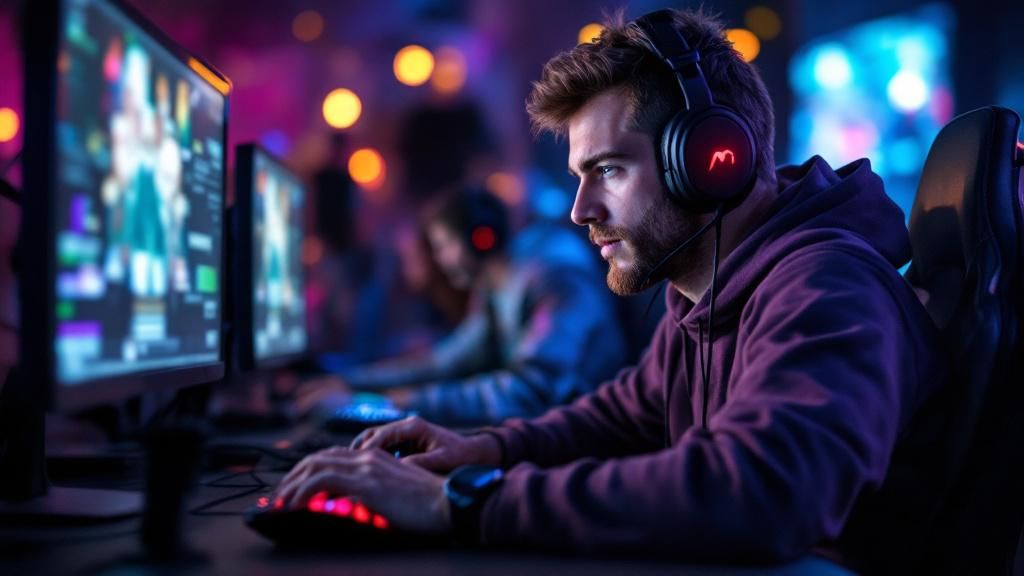
The thriving esports industry is experiencing a major transformation. Once regarded as purely casual, professional gaming now rivals traditional sports in demanding nature and mental demands. Recognising the mounting pressure on elite players—from intensive training regimens to high-stakes tournaments—prominent esports bodies are now prioritising mental wellness. This article explores how organisations are implementing mental health counselling, performance psychologists, and wellbeing initiatives to safeguard their athletes’ wellbeing, marking a pivotal shift towards a healthier professional gaming culture.
The Rise of Psychological Wellbeing Recognition in Esports
The esports industry has experienced a notable cultural shift in the past few years, with mental health rising as a essential concern amongst professional players and gaming organisations alike. Previously overlooked or stigmatised, psychological wellbeing is now recognised as integral to competitive performance. Elite players experience unprecedented pressure—rigorous training schedules, unrelenting tournament schedules, and considerable financial stakes establish conditions where mental resilience proves as vital as mechanical skill. This increased awareness reflects broader social conversations surrounding mental health, combined with mounting evidence that psychological support directly strengthens performance and longevity in professional gaming.
Leading esports franchises are addressing this awareness by introducing extensive wellbeing strategies. Teams now engage dedicated sports psychologists, counsellors, and wellbeing specialists working with their coaching staff. These professionals handle issues ranging from performance anxiety and burnout to psychological difficulties and isolation—challenges uniquely prevalent within the esports ecosystem. By encouraging open dialogue about mental health and offering readily available assistance, organisations are creating a benchmark that competitive success needn’t come at the expense of psychological wellbeing, significantly redefining professional gaming culture.
Rolling out Comprehensive Mental Wellness Initiatives
Leading esports organisations are implementing structured mental health frameworks that align with those present in traditional professional sports. These programmes typically comprise access to licensed psychologists, counsellors, and mental health practitioners who have expertise in performance anxiety, burnout, and stress management. Teams are allocating resources for regular wellness assessments, confidential support sessions, and crisis intervention protocols. By incorporating mental health services directly into their organisational structure, clubs demonstrate a genuine commitment to player wellbeing whilst simultaneously improving team performance and competitive longevity.
The establishment of these programmes goes beyond individual counselling sessions. Many organisations now provide comprehensive wellness programmes encompassing sleep optimisation, nutrition guidance, mindfulness training, and work-life balance strategies. Team psychologists liaise with coaching staff to identify at-risk players and provide proactive interventions. Furthermore, several clubs have established peer support networks and created safe spaces where players can discuss mental health concerns without stigma. This comprehensive approach acknowledges that long-term competitive success requires tackling the psychological underpinnings underpinning elite performance.
Advantages of Long-Term Impact on Gaming Ability
Mental health assistance has substantially boosted player performance across professional esports organisations. Players receiving psychological counselling report better focus, improved decision-making under pressure, and greater emotional resilience during competitive events. Teams adopting mental health programmes have documented measurable gains in tournament results and player consistency. Furthermore, athletes working with sports psychologists develop enhanced coping mechanisms for managing stress, anxiety, and performance-related pressure. These interventions are associated with superior gameplay quality and sustained competitive excellence throughout full competitive seasons.
Beyond direct competitive gains, comprehensive mental health initiatives foster sustained career duration and career sustainability. Professional esports careers are famously short-lived, often spanning merely five to ten years due to mental fatigue and stress-related decline. Mental health support extends playing careers by preventing chronic stress-related conditions and promoting balanced preparation methods. Players benefiting from continuous mental health provision show improved work-life balance, lower exhaustion levels, and greater job satisfaction. Consequently, organisations gain advantages through retaining experienced talent, maintaining team cohesion, and preserving institutional knowledge that strengthens competitive advantage over prolonged timeframes.
The normalisation of mental health support within esports produces profound cultural shifts advantaging the whole sector. Young up-and-coming players now acknowledge that seeking psychological assistance represents resilience not fragility, fundamentally changing perspectives on mental fitness. This cultural shift supports forward-thinking mental care approaches, early intervention, and preventative care strategies. As the esports sector matures, clubs focusing on comprehensive player welfare establish themselves as sector pioneers, attracting elite players and cultivating more robust and enduring competitive spaces that ultimately elevate the whole esports sector.
