
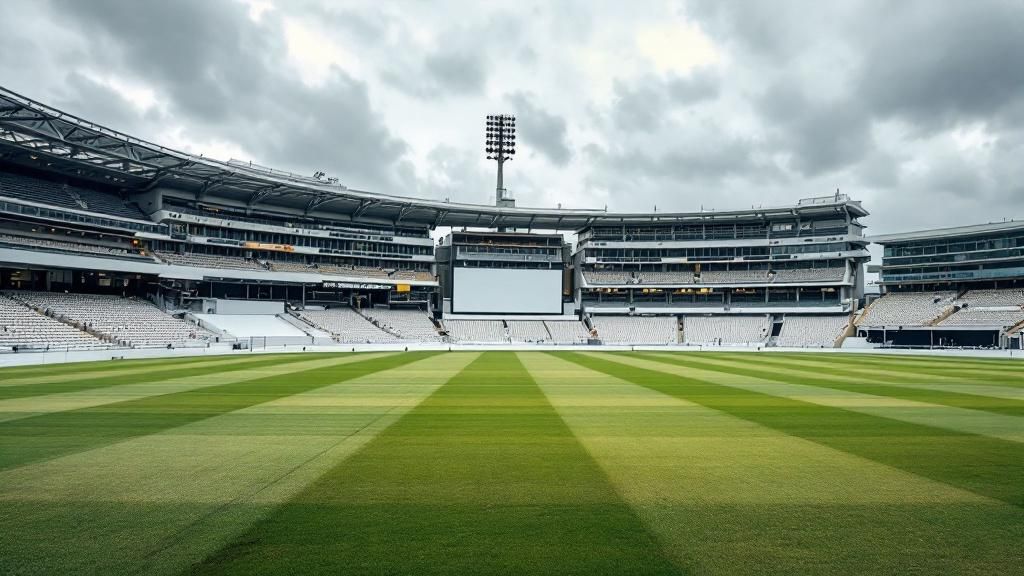
Sussex cricket club is dealing with an uncertain future as money troubles worsens at Hove, with head coach Paul Farbrace telling members he doesn’t know whether he will continue at the club in the coming year. Following Tuesday’s AGM, the 58-year-old acknowledged that some of his players are at risk of being targeted by other county sides given Sussex’s weak financial standing. The club posted losses of £1.3m in 2025 and faces another £1m deficit this season, prompting an emergency rescue package from the England and Wales Cricket Board. Operating under strict ECB restrictions and facing a 12-point County Championship deduction, Sussex’s outlook for the upcoming season appear bleak.
The extent of Sussex’s financial emergency
The true extent of Sussex’s money troubles emerged clearly at Tuesday’s AGM, where the club’s officials exposed the consequences of years of operating losses. Sussex posted a deficit of £1.3m in 2025 and is bracing itself for another £1m shortfall during the current season. These figures underscore a systemic challenge that has compelled the club into an emergency rescue package from the England and Wales Cricket Board, a governing body support that includes significant strings attached.
Under the provisions of the ECB’s intervention, Sussex will stay in special measures until January 2029, a timeframe during which the club must operate under rigorous budgetary controls. Most significantly, any new player signings now require prior clearance from the ECB, substantially limiting the club’s ability to bolster the team or substitute outgoing staff. This stipulation is apt to create profound implications for recruitment strategy, especially concerning overseas signings, and constitutes a considerable diminishment of independence for a club with a distinguished cricketing tradition.
- Sussex posted £1.3m losses in 2025 and confronts another £1m shortfall
- Club functioning under ECB restrictions after emergency bailout from governing body
- 12-point County Championship points deduction plus one-point deduction in limited-overs formats
- Special measures framework expected to remain in place until January 2029
Questions remain about Farbrace and his team
Paul Farbrace’s position as Sussex head coach has become increasingly precarious in the wake of the club’s money troubles. The 58-year-old told members at Tuesday’s AGM that he holds no guarantee about his future at Hove, recognising that his time in post remains dependent on the club’s ability to meet its monetary commitments. This candid admission underscores the seriousness of Sussex’s difficult situation, where even top executives cannot assure their continued employment. Farbrace’s honesty reflects the exceptional turmoil engulfing the county, where conventional employment stability has become a privilege the club can no longer sustain.
Despite the grim outlook, Farbrace stated that his playing squad remain committed to Sussex despite their understandable anger and disappointment upon discovering the complete scale of the club’s troubles. The coach’s ability to preserve squad morale amid such instability speaks to his leadership qualities, yet the fragility of the situation cannot be understated. With players aware that the club’s precarious standing may attract interest from competing counties, keeping experienced players will prove progressively challenging. The risk of losing experienced performers to better-funded competitors represents a additional setback to Sussex’s already weakened outlook for the season ahead.
Squad departures anticipated
Farbrace expects that several of his players will be courted by other counties as the season progresses, a natural consequence of Sussex’s precarious financial position. Whilst the lead coach downplayed specific reports that James Coles, the all-rounder had previously been contacted by Hampshire, he stressed that such advances are likely to intensify. Players reasonably desire stability and security, benefits that Sussex cannot currently guarantee. The prospect of losing team members to rival counties will further undermine the club’s competitive outlook and exacerbates the structural difficulties affecting the club.
The ECB’s mandate requiring pre-approval of fresh acquisitions severely limits Sussex’s ability to replace any departing players, creating a vicious cycle of decline. Even if the club identifies suitable replacements, obtaining ECB approval creates administrative hold-ups and unpredictability into the recruitment process. This limitation especially affects overseas signings, a traditional avenue for counties seeking to strengthen their rosters with experienced international talent. Sussex’s failure to respond quickly to player departures places them at a substantial competitive disadvantage compared to better-resourced rivals.
ECB bailout comes with strict conditions
The emergency financial rescue package extended by the England and Wales Cricket Board has become a vital support for Sussex, yet it arrives laden with stringent conditions that will significantly transform how the club operates. Chief executive Mark West presented the regulatory framework at Tuesday’s AGM, making plain that Sussex’s journey towards financial health is constrained by oversight and restrictions. Most significantly, the club must now seek ECB approval before recruiting new talent, a stipulation that will persist until at least January 2029. This unprecedented level of outside oversight demonstrates the gravity of Sussex’s financial failings and the governing body’s commitment to forestall subsequent emergencies of this scale.
Beyond recruitment limitations for players, Sussex must contend with a complex landscape of sporting penalties alongside their financial rehabilitation. The 12-point deduction in the domestic first-class competition represents the most visible punishment, yet the club has also been docked a point in each of the season’s two white-ball formats. These penalties, combined with the recruitment restrictions, create a perfect storm of sporting handicap. Sussex enters the upcoming season against Leicestershire already weighed down by these disadvantages, whilst at the same time operating under the watchful eye of ECB officials determined to ensure compliance with their bailout conditions.
| Restriction | Impact |
|---|---|
| ECB pre-approval required for all new signings | Delays recruitment process and limits strategic flexibility in player acquisitions |
| Special measures until January 2029 | Three-year period of external governance and continued financial scrutiny |
| 12-point County Championship deduction | Significantly hampers promotion prospects and competitive standing from season outset |
| Limited-overs competition point deductions | Further reduces chances of silverware success across all domestic formats |
Lasting implications for recruitment
The need for ECB pre-approval of new signings will substantially change Sussex’s recruitment strategy for years to come. The club’s traditional ability to move quickly in the transfer market has been ceded to bureaucratic oversight, creating hold-ups that could become expensive when pursuing targets. Overseas recruitment, historically a key avenue for bolstering teams, faces particular jeopardy as the ECB examines overseas acquisitions more intensely. Whilst this season’s acquisitions of Australian Daniel Hughes and India’s Jaydev Unadkat stay unimpacted, future overseas acquisitions will face increased examination and possible rejection.
The three-year timeframe of special measures extending to January 2029 means Sussex faces a lengthy stretch of restricted recruitment capacity. This extended restriction threatens generating a growing performance divide between Sussex and better-funded competitors who operate without such constraints. The club’s capacity to attract rising players or replace exiting squad members will remain severely hampered, potentially triggering a downward spiral in on-field results. Management consultant Campbell Tickell’s organisational assessment, due in June, may recommend reforms, yet fundamental recovery appears unlikely within the current governance structure.
Route to recovery and governance review
Sussex’s route to financial stability stays shrouded in uncertainty, with the club facing a lengthy rehabilitation period under ECB supervision. Management consultant Campbell Tickell has been tasked with conducting a comprehensive review of the club’s operational structure and management. Findings are expected to emerge in June. This assessment will investigate operational inefficiencies and decision-making processes that contributed to the club’s vulnerable financial standing. The review represents a critical juncture for Sussex, potentially identifying structural changes required to avert future crises and rebuild trust among stakeholders in the club’s leadership.
The period for turnaround extends well beyond the immediate season, with Sussex functioning within enhanced oversight until January 2029. This three-year stretch of independent monitoring will significantly alter how the club operates, from recruitment decisions to financial distributions. The ECB’s involvement, whilst delivering crucial financial lifelines, comes with demanding stipulations that restrict autonomy and necessitate continuous regulatory oversight. Club officials must exhibit ongoing fiscal responsibility and operational reforms to finally restore self-governance, a formidable task given the underlying organisational issues that led to the emergency bailout.
- Campbell Tickell review findings expected June 2026 to identify organisational changes
- Special measures oversight remains in place until January 2029 demanding rigorous ECB compliance
- Governance enhancements critical to restore investor trust and fiscal security
